Skin Grafting Surgery
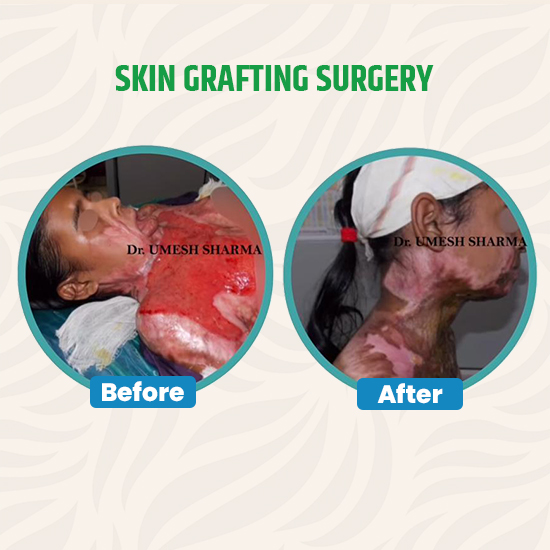
Skin grafting is a surgical procedure used to replace damaged or missing skin with healthy skin taken from another part of the body. At our Superspeciality Centre, skin grafting is performed to treat burn injuries, chronic wounds, trauma, and post-burn defects, helping restore skin integrity, function, and appearance.
With extensive experience in burn care and reconstructive surgery, our team delivers safe and effective skin grafting procedures with high success and recovery rates.
What is Skin Grafting?
Skin grafting involves removing a thin layer of healthy skin (donor site) and transplanting it to an area where skin has been lost due to burns, injury, infection, or surgery. The graft helps cover exposed tissue, prevent infection, and promote healing.
Skin grafting is often recommended when wounds are too large or deep to heal naturally.
When is Skin Grafting Required?
Skin grafting may be advised for:
- Deep burns and post-burn wounds
- Non-healing or chronic wounds
- Traumatic skin loss
- Surgical wound coverage
- Pressure sores (bedsores)
- Post-infection skin defects
Early intervention improves healing outcomes and reduces complications.
Types of Skin Grafts
Split-Thickness Skin Graft (STSG)
- Involves epidermis and part of dermis
- Commonly used for burn wounds
- Heals faster and covers larger areas
Full-Thickness Skin Graft (FTSG)
- Includes entire thickness of skin
- Used for smaller defects requiring better cosmetic results
- Provides better colour and texture match
The choice of graft depends on wound size, depth, and location.
Skin Grafting Procedure
The procedure is performed under sterile conditions and involves:
- Careful wound assessment and preparation
- Harvesting healthy skin from a donor area
- Placement of the graft over the wound
- Securing the graft and dressing application
Advanced wound care techniques are used to improve graft acceptance and healing.
Benefits of Skin Grafting
- Promotes faster wound healing
- Protects against infection
- Reduces fluid loss
- Restores skin coverage
- Improves functional and cosmetic outcomes
- Helps prevent scarring and contractures
Post-Grafting Care & Recovery
Recovery depends on graft type and wound severity. Post-operative care includes:
- Regular wound monitoring
- Infection prevention
- Pain management
- Physiotherapy when required
- Scar management and follow-up care
Proper aftercare plays a vital role in graft success.
Why Choose Our Skin Grafting Centre?
- Experienced plastic and reconstructive surgeons
- Specialised burn and wound care unit
- Advanced surgical and post-operative facilities
- Personalised treatment planning
- High graft acceptance and recovery rates